
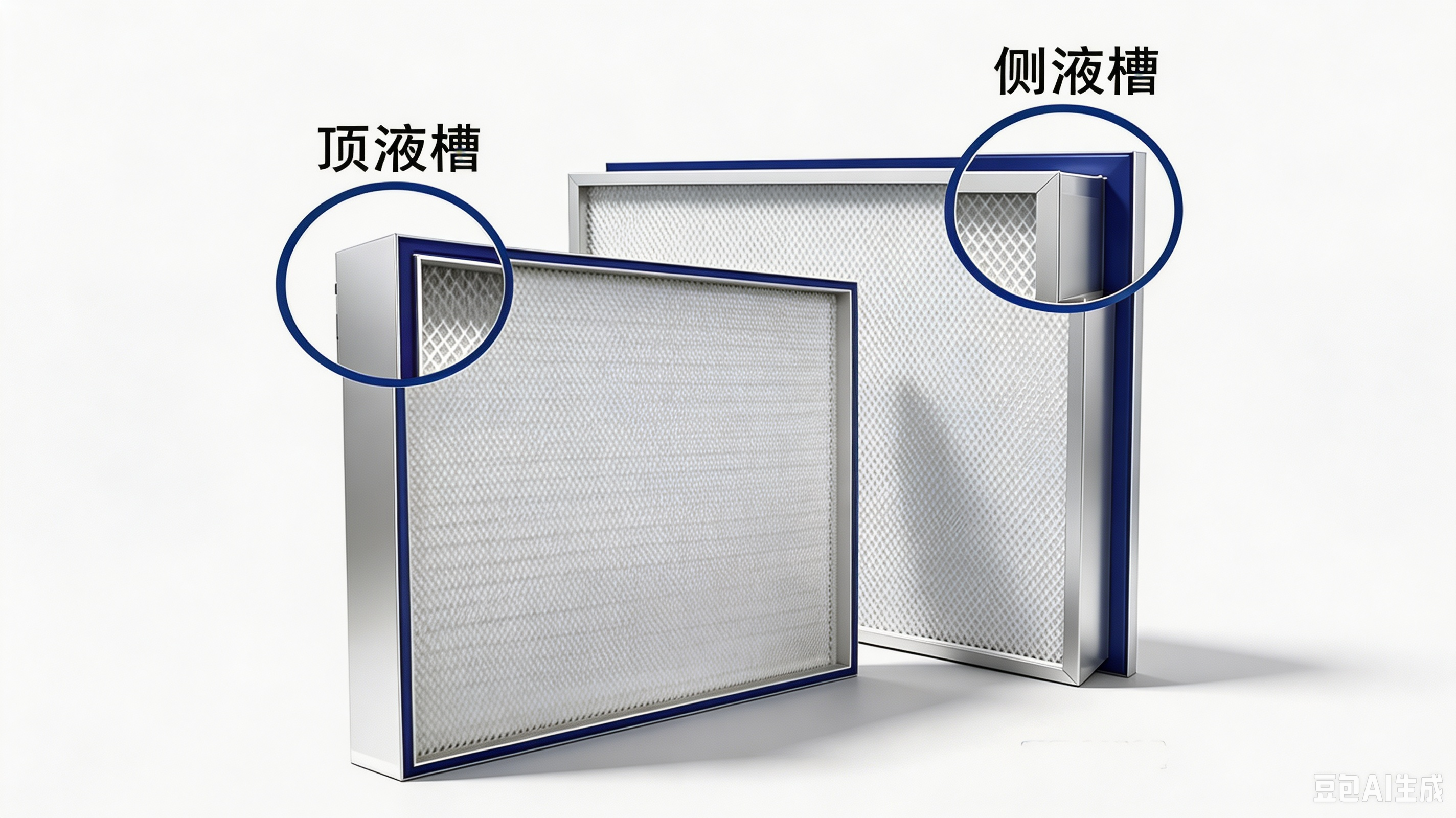
Differences and Application Scenarios Between Liquid-Joint Seals and Dry-Gasket Seals
Liquid seal and dry gasket are the two primary sealing methods for high-efficiency filters, each with its own advantages and disadvantages suited to different applications.
1. Liquid槽 Seal
Working Principle: The filter frame is dipped into the liquid槽 sealant to create a seal. Benefits: - Excellent sealing performance with minimal leakage - Reusable - Suitable for high-cleanliness environments
Drawbacks: - Complex installation - Requires periodic sealant replenishment - Higher cost
Application: ISO 5 and lower cleanroom environments, such as semiconductor wafer fabrication facilities and biopharmaceutical cleanrooms.
II. Dry Pad Seal
Working Principle: Sealing using elastic gaskets (e.g., neoprene, silicone). Benefits: - Easy installation - Low cost - Simple maintenance
Drawbacks: - Lower sealing performance - Gaskets require replacement after aging - Not suitable for ultra-high cleanliness environments
Application scenario: ISO 6 and above standard cleanroom environments, such as general electronics and food manufacturing facilities.
III. Selection Recommendations
Select based on cleanliness level, budget, and maintenance capability. Use liquid seal for high-cleanliness environments; dry gasket seals are sufficient for standard environments.